Just Tech Me At
6 Smart Smoke and Carbon Monoxide Detectors for Modern Home Safety
2026-06-19
by Just Tech Me At
*As an Amazon Associate, I earn from qualifying purchases.*



.svg.png)


Introduction
Smart smoke and carbon monoxide detectors have evolved beyond basic audible alarms. Current models may add wireless interconnection, mobile notifications, voice and location alerts, self-testing, long-life batteries, and integration with a home-security system.
This guide examines six currently available detectors from X-Sense, First Alert, Kidde, and SimpliSafe. The goal is not to declare one universal winner, but to help you identify the option that best matches your home, existing wiring, preferred smart-home ecosystem, and desired level of connectivity.
The comparison considers smoke and carbon monoxide coverage, sensor and alert features, interconnection, app support, installation requirements, battery or backup power, everyday usability, and ecosystem compatibility. Smart features are useful, but they do not replace proper placement, regular testing, or compliance with local building and fire-safety codes.
1. X-Sense Smoke Detector Carbon Monoxide Detector Combo, SC07
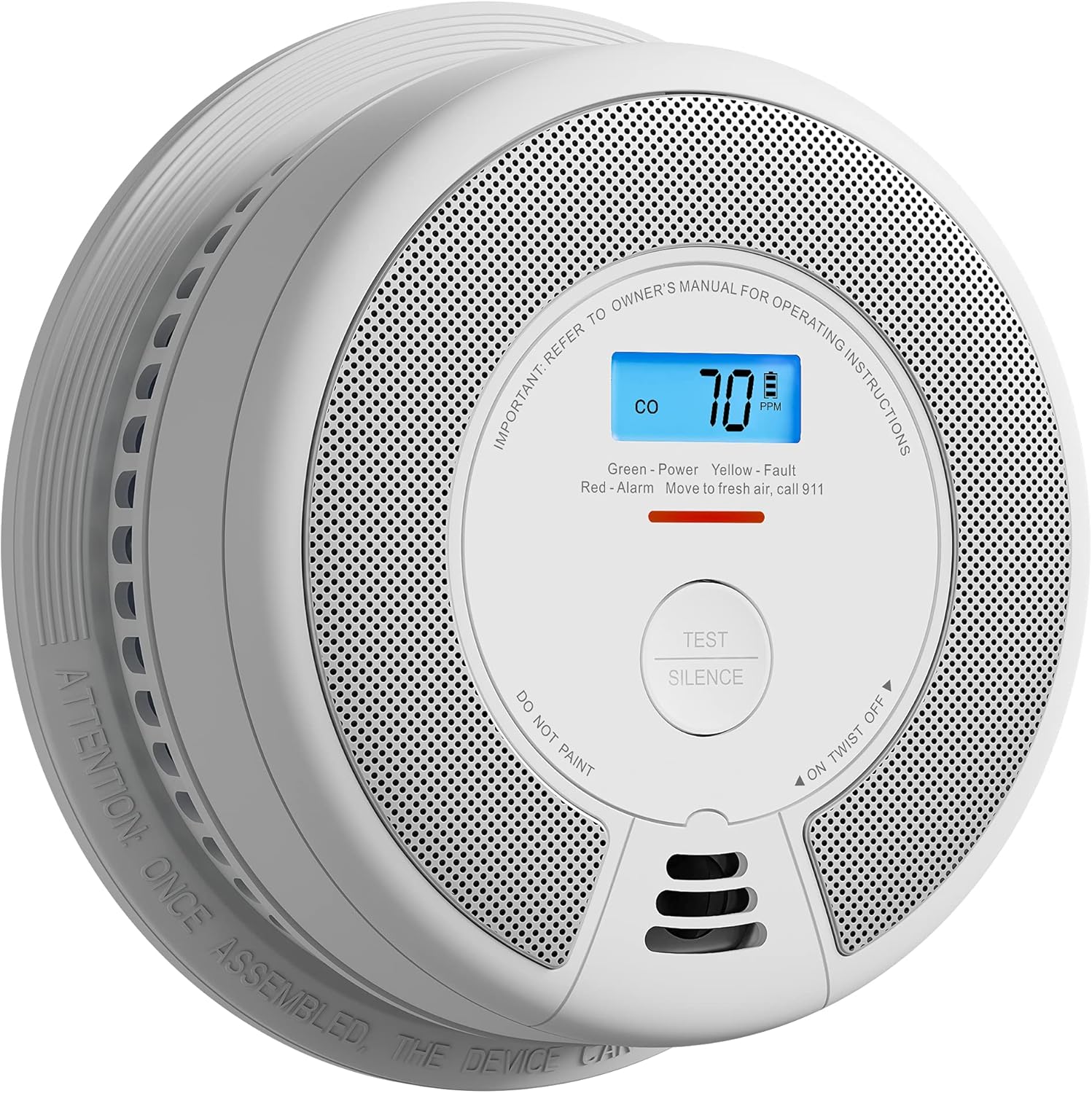
The X-Sense SC07 combines photoelectric smoke detection and carbon monoxide detection in one battery-powered alarm. It is designed for households that want simple dual-threat protection without creating an account, configuring Wi-Fi, or depending on cloud services.
Key Features
✅ Pros
❌ Cons
2. First Alert SMI100 Precision Detection Smoke Alarm

The First Alert SMI100 is a hardwired smoke alarm focused on dependable local detection rather than Wi-Fi features. Its precision-detection design is intended to better distinguish dangerous smoke from common nuisance sources such as cooking smoke and steam.
Key Features
✅ Pros
❌ Cons
3. Kidde Smart Smoke Detector & Indoor Air, Quality Monitor, WiFi, Alexa Compatible Device, Hardwired w/Battery Backup, Voice & App Alerts

This Kidde model combines smart smoke detection with indoor-air-quality monitoring and connected alerts. It is aimed at households that want a familiar safety brand, mobile status information, voice notifications, and compatibility with a connected-home setup.
Key Features
✅ Pros
❌ Cons
4. X-Sense Interconnected Smoke and CO Detector Combo, SC01-W

The X-Sense SC01-W is a combination smoke and carbon monoxide detector designed to work within a compatible wireless interconnected alarm network. When one linked unit detects danger, the connected alarms can sound throughout the home without requiring a wired interconnect circuit.
Key Features
✅ Pros
❌ Cons
5. First Alert SMCO210V Combination Smoke & Carbon Monoxide Alarm with Voice & Location Alerts

The First Alert SMCO210V combines smoke and carbon monoxide detection with voice and location alerts that can help occupants understand the type and location of a warning. It favors clear local protection and long-term simplicity over Wi-Fi accounts and remote app controls.
Key Features
✅ Pros
❌ Cons
6. SimpliSafe Smoke & Carbon Monoxide Detector, Battery Powered

The SimpliSafe Smoke & Carbon Monoxide Detector brings both hazards into the SimpliSafe home-security ecosystem. It is intended for users who already have a compatible SimpliSafe base station and want fire and CO alerts managed alongside intrusion sensors and other security devices.
Key Features
✅ Pros
❌ Cons
How to Choose the Right Smoke and CO Detector
Start by confirming what each location in your home requires. Some rooms need smoke detection, some need carbon monoxide detection, and many households benefit from combination units.
- Choose the correct detection coverage: Confirm whether the device detects smoke, carbon monoxide, indoor air quality, or a combination.
- Match the installation: Replace hardwired alarms with compatible hardwired models when appropriate, or choose battery-powered units for simpler retrofits.
- Consider interconnection: Linked alarms can sound throughout the home when one unit detects danger. Proprietary wireless systems generally require compatible models from the same family.
- Decide how much connectivity you need: App alerts are useful for travel, rentals, second homes, and remote monitoring, but Wi-Fi and cloud services add setup requirements.
- Review ongoing costs: Some security-system integrations require a base station or paid monitoring plan for remote dispatch and advanced alerts.
- Check certifications and local rules: Verify the exact model, listing, installation instructions, and applicable residential codes before purchase.
Safety and Product Disclaimer
Product features, compatibility, certifications, pack sizes, and model variants can change. Confirm the exact Amazon listing and manufacturer documentation before purchasing. Install every alarm according to the manufacturer's instructions and applicable local codes. Test alarms regularly and replace them at the end of their rated service life. Smart notifications are supplemental and should never be treated as a substitute for a functioning local audible alarm.
Bottom Line
The right detector depends on the protection and connectivity your home actually needs. X-Sense models are practical for straightforward combination coverage and wireless interconnection. First Alert offers familiar hardwired and voice-alert options. Kidde adds app-connected monitoring and indoor-air-quality features, while SimpliSafe is most useful for households already using its security ecosystem.
Whichever model you select, prioritize correct placement, compatible installation, dependable local alarms, regular testing, and timely replacement. Those fundamentals matter more than any app or smart-home feature.