
Just Tech Me At
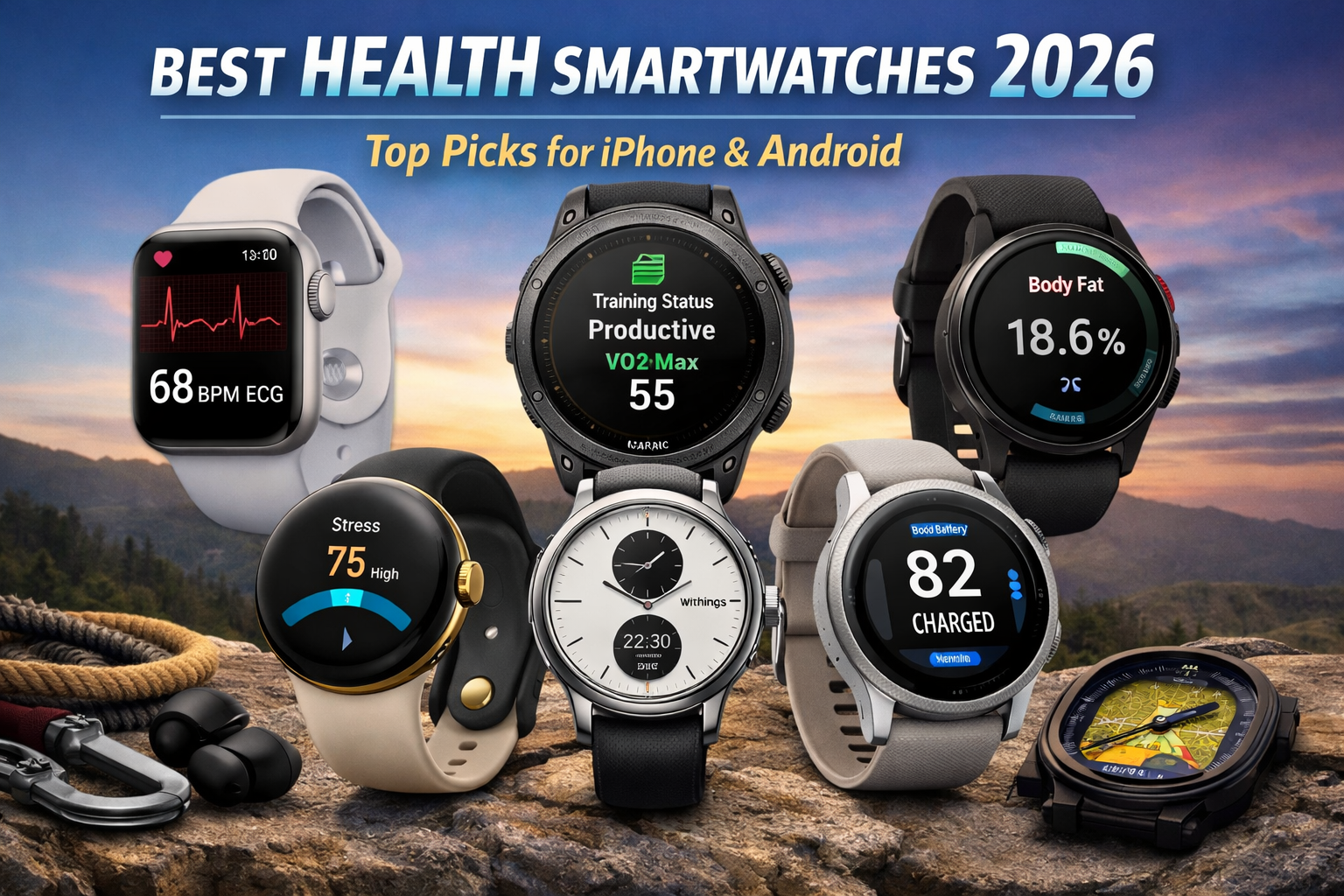
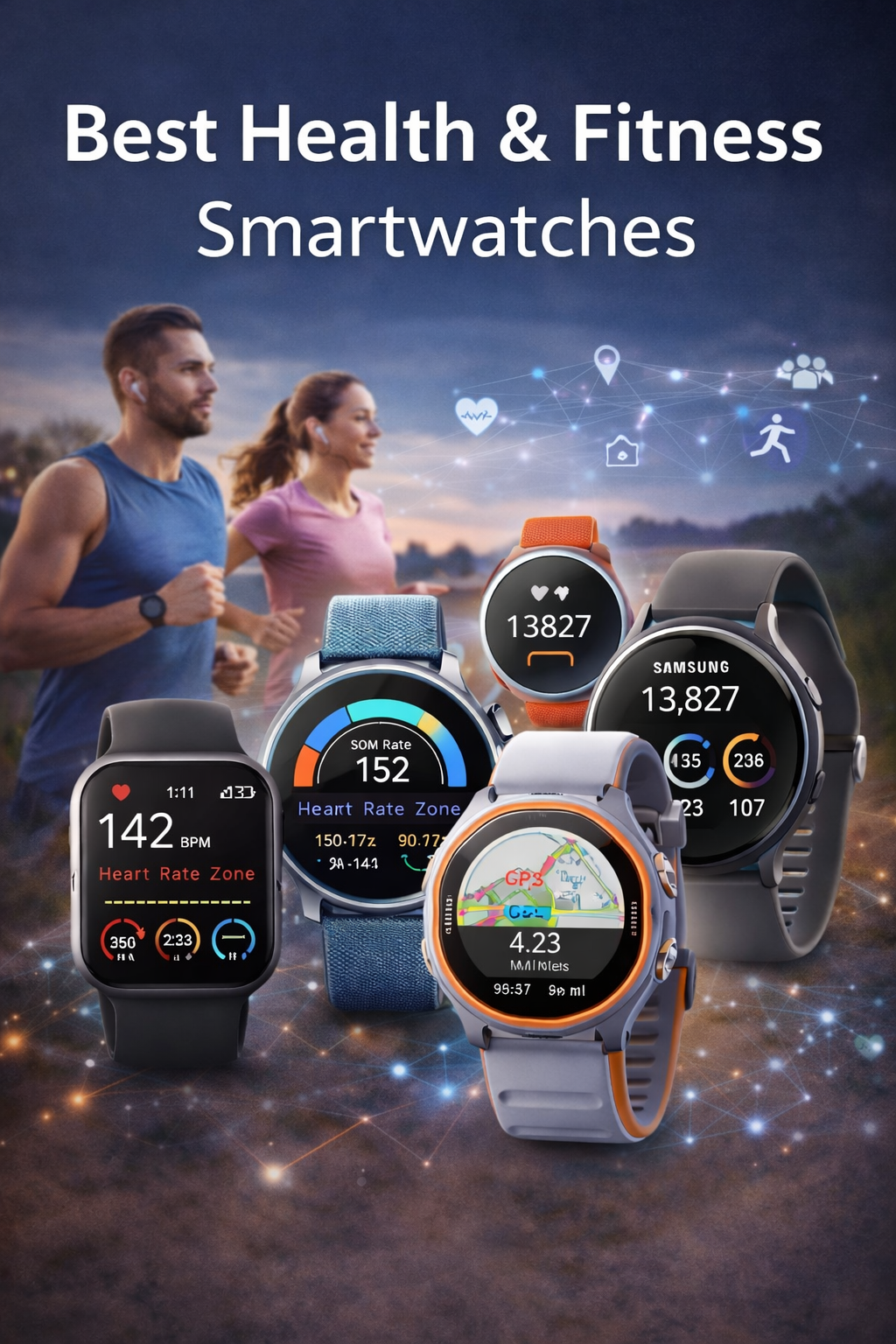
Best Health & Fitness Smartwatches
March 6, 2026
Updated May 24, 2026
by Just Tech Me At
*As an Amazon Associate, I earn from qualifying purchases.*

.svg.png)




Follow us on social media for
freebies and new article releases.
Spotify
Introduction
In the modern landscape of wearable technology, selecting the right device is less about finding a single "best" watch and more about identifying the one that aligns with your smartphone ecosystem, fitness goals, and lifestyle preferences. The market offers a diverse range of options, from the highly integrated Apple Watch Series 10 and Samsung Galaxy Watch 7 to specialized tools like the rugged Apple Watch Ultra 3 for adventurers or the Withings ScanWatch 2 for those who prefer a discreet, classic aesthetic.
This guide explores the top health and fitness smartwatches available in 2026, detailing how they track critical metrics such as heart rate, sleep quality, stress levels, and specialized training data. Whether you are a dedicated athlete requiring the deep analytics of a Garmin Fenix 8 or a casual user looking for the approachable wellness scores of a Fitbit Sense 2, this article breaks down the pros and cons of each major contender. By focusing on consistency and actionable insights, you can choose a companion that does more than just collect data. Smartwatches can help you adjust your daily habits for better long-term health.
Compare Smartwatches
1. Apple Watch Series 10

Best overall for iPhone users - Most comprehensive health & safety
Apple's flagship remains the most rounded health smartwatch if you use an iPhone. Its edge is less about individual sensors and more about how well everything is integrated-heart, activity, medications, cycle tracking, and safety alerts all feed into Apple Health.
Key Health Features
Pros
- Top-tier app ecosystem and third-party health integrations.
- Regulatory clearances for ECG/AFib in many regions.
- Excellent display and usability; fast charging offsets modest battery life.
Cons
- Works only with iPhone.
- Battery life is one to two days, which can be limiting for 24/7 tracking plus heavy GPS.
2. Apple Watch Ultra 3
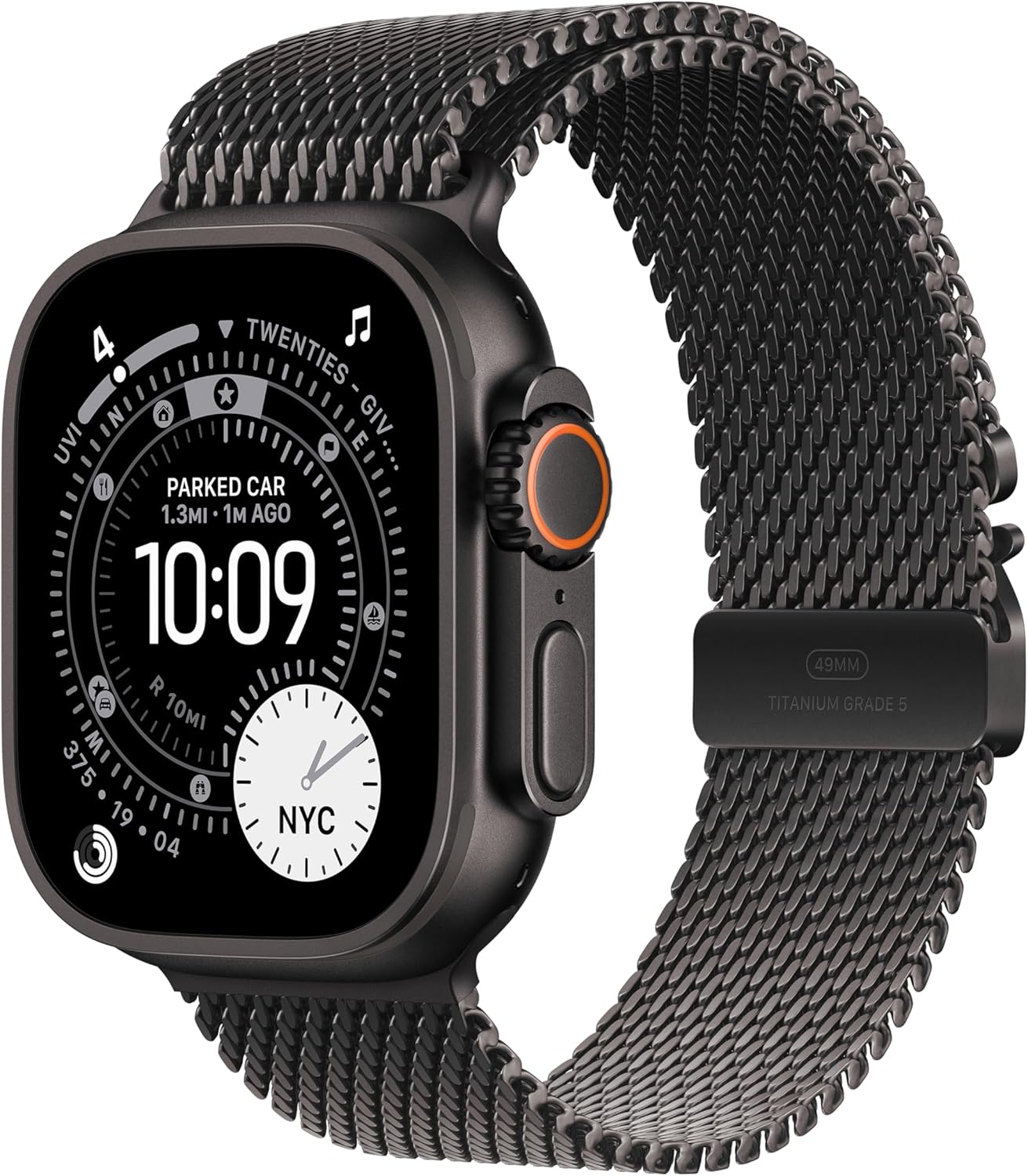
Best for serious outdoor training and off-grid iPhone users - Rugged, bright, and built for longer adventures
The Apple Watch Ultra 3 builds on Apple's premium adventure-watch line with a rugged titanium case, a bright always-on display, built-in GPS + Cellular, and satellite communication features designed for athletes, hikers, divers, and endurance-focused users.
Key Health & Fitness Features
Pros
- Excellent fit for endurance athletes, hikers, divers, and users who spend a lot of time outdoors.
- More capable for rugged and remote use than standard Apple Watch models.
- Large, bright screen makes workout stats, maps, and alerts easier to read on the move.
Cons
- Expensive compared with mainstream smartwatches.
- Large 49mm case may feel bulky on smaller wrists.
- Best experience still depends on being in the Apple/iPhone ecosystem.
3. Samsung Galaxy Watch 7

Best for Samsung/Android users overall - Body composition & sleep strengths
The Galaxy Watch 7 (and Watch 7 Ultra, if you choose the more rugged version) runs Wear OS with Samsung's One UI Watch. It stands out for body composition tracking and deep integration with Samsung Health.
Key Health Features
*Blood pressure and certain features may not be available in all regions or on all phones; always check local regulatory status.
Pros
- Rich health dashboard in Samsung Health with actionable coaching.
- Good fitness tracking for running, gym, and general activity.
- Works with most Android phones; best experience with Samsung devices.
Cons
- Battery is around 1.5-2 days; nightly charging is still common.
- Some advanced features are Samsung-phone only or region-locked.
4. Google Pixel Watch 3

Best health watch for pure Android/Google ecosystem - Fitbit health + Wear OS apps
Pixel Watch 3 blends Google's hardware with Fitbit's health platform. The emphasis is on intuitive health scores (Stress, Readiness, Sleep) rather than raw data, making it approachable for people new to tracking.
Key Health Features
Pros
- Excellent integration with Google services (Assistant, Maps, Wallet, Calendar).
- Fitbit's health metrics are clear and beginner-friendly.
- Clean, compact design; good for smaller wrists.
Cons
- Battery usually requires daily charging, especially with always-on display.
- Some deeper health insights are paywalled behind Fitbit Premium in many regions.
5. Garmin Venu 3

Best mix of lifestyle health & long battery - Great for 24/7 tracking
The Venu 3 is Garmin's most "smartwatch-like" wearable, with an AMOLED display but classic Garmin battery life. It focuses equally on health trends (sleep, stress, HRV) and everyday fitness, with lighter smartwatch app support than Apple/Samsung.
Key Health Features
Pros
- 5-10 days battery with full health tracking, rare among AMOLED watches.
- Strong sport modes (running, cycling, strength, yoga, etc.) and training plans.
- Works equally well with iOS and Android.
Cons
- No ECG as of early 2026 in most regions.
- App ecosystem and smart features are less mature than Apple/Samsung/Google.
6. Garmin Fenix 8 / Epix (Gen 3)

Best for serious endurance & adventure - Deep training load & recovery
Fenix and Epix lines are overkill for casual users but ideal for multi-sport athletes and those living outdoors. Epix provides an AMOLED display; Fenix favors maximum battery and solar options.
Key Health & Training Features
Pros
- Very long battery life even with frequent GPS workouts.
- Arguably the deepest training analytics available on a mainstream smartwatch.
- Highly durable: sapphire glass options, high water resistance.
Cons
- Bigger, heavier, and more complex than most people need.
- Pricey and best justified only if you'll use the advanced training and navigation features.
7. Fitbit Sense 2

Best for stress tracking & everyday wellness
Fitbit Sense 2 focuses heavily on daily wellness, especially stress and sleep, while still covering core heart-health and activity features. It is positioned as an advanced health and fitness smartwatch for users who want easy-to-understand insights without stepping into a more sport-heavy watch category.
Key Health Features
Pros
- Strong option for users who care about stress management, sleep insights, and general wellness tracking.
- Fitbit app presents health data in a beginner-friendly way.
- Multi-day battery life is better than many mainstream smartwatches.
Cons
- Less appealing for advanced training metrics than Garmin, Polar, or Coros devices.
- Some deeper insights and guided content are tied to Fitbit Premium.
- Better suited to wellness-focused users than performance-focused athletes.
8. Polar Vantage V3
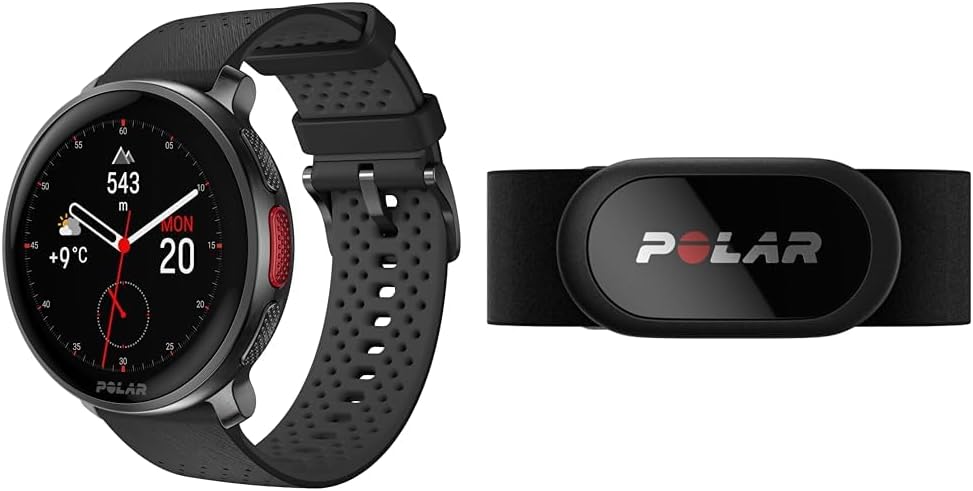
Best for data-driven training & recovery (HRV heavy)
Polar targets serious trainers and coaches. The Vantage V3 leans hard on heart-rate variability (HRV) and structured training plans to optimize recovery, especially for runners and endurance athletes.
Key Health Features
Pros
- Excellent for athletes who want science-driven training guidance.
- Very strong HR data when paired with a Polar chest strap.
- Multiple-day battery even with regular training.
Cons
- Interface and app feel more "technical" and less consumer-friendly.
- Limited third-party apps compared with Apple/Samsung/Google.
9. Coros Pace 3

Best value for runners & triathletes - Extreme battery
Coros has built a reputation among competitive runners and triathletes for accuracy and battery life at aggressive prices. The Pace 3 is lightweight, simple, and focused strongly on training metrics.
Key Health & Fitness Features
Pros
- Exceptional battery: typically ~17-24 days of normal use; long GPS life.
- Lightweight and comfortable for long runs and races.
- Strong value vs. premium Garmin/Polar models.
Cons
- Limited smartwatch features (apps, payments, calls, etc.).
- Health insights aren't as "coached" or polished as Fitbit or Apple.
10. Withings ScanWatch 2
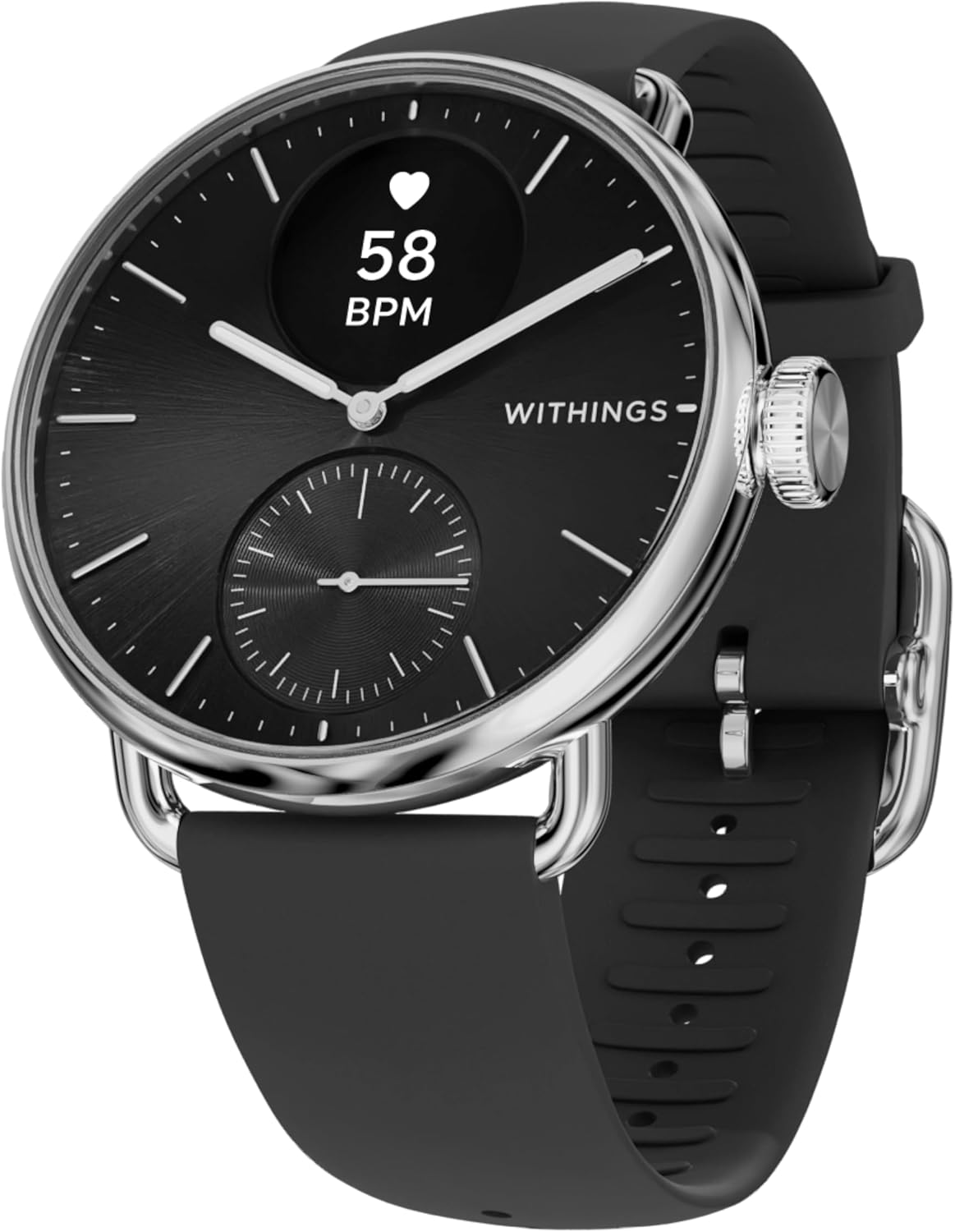
Best hybrid for discreet medical-leaning tracking
Withings ScanWatch 2 looks like a classic analog watch but hides a health-focused smart core. It's especially appealing if you dislike overt tech on your wrist but want medical-leaning features.
Key Health Features
Pros
- Looks like a traditional watch; very discreet in professional settings.
- Battery up to ~30 days means fewer gaps in health data.
- Strong focus on validated health metrics and medical partnerships.
Cons
- Small OLED complication; not ideal for heavy app or map usage.
- Fewer sport tools than dedicated fitness watches.
Compare Smartwatches
How to Choose the Right Health Smartwatch for You
1. Match the Watch to Your Phone
2. Decide Your Main Goal
3. Consider Battery vs. Features
4. Understand Health Limitations
Bottom Line
If you're deeply embedded in a smartphone ecosystem, start there: Apple Watch for iPhone, Galaxy Watch or Pixel Watch with Fitbit for Android.
If you care more about battery and training depth, Garmin, Polar, and Coros are better suited.
For a discrete, long-battery health companion with medical-leaning features, Withings ScanWatch 2 stands out.
Whichever you choose, the real value comes from consistency: wearing it daily, tracking trends, and using the feedback to adjust sleep, activity, and stress-not from any single sensor or one-off reading.
Related Articles






Browse Amazon
Shop Now!
*As an Amazon Associate I earn from qualifying purchases.*
More Smart Devices*As an Amazon Associate I earn from qualifying purchases.*
