Just Tech Me At
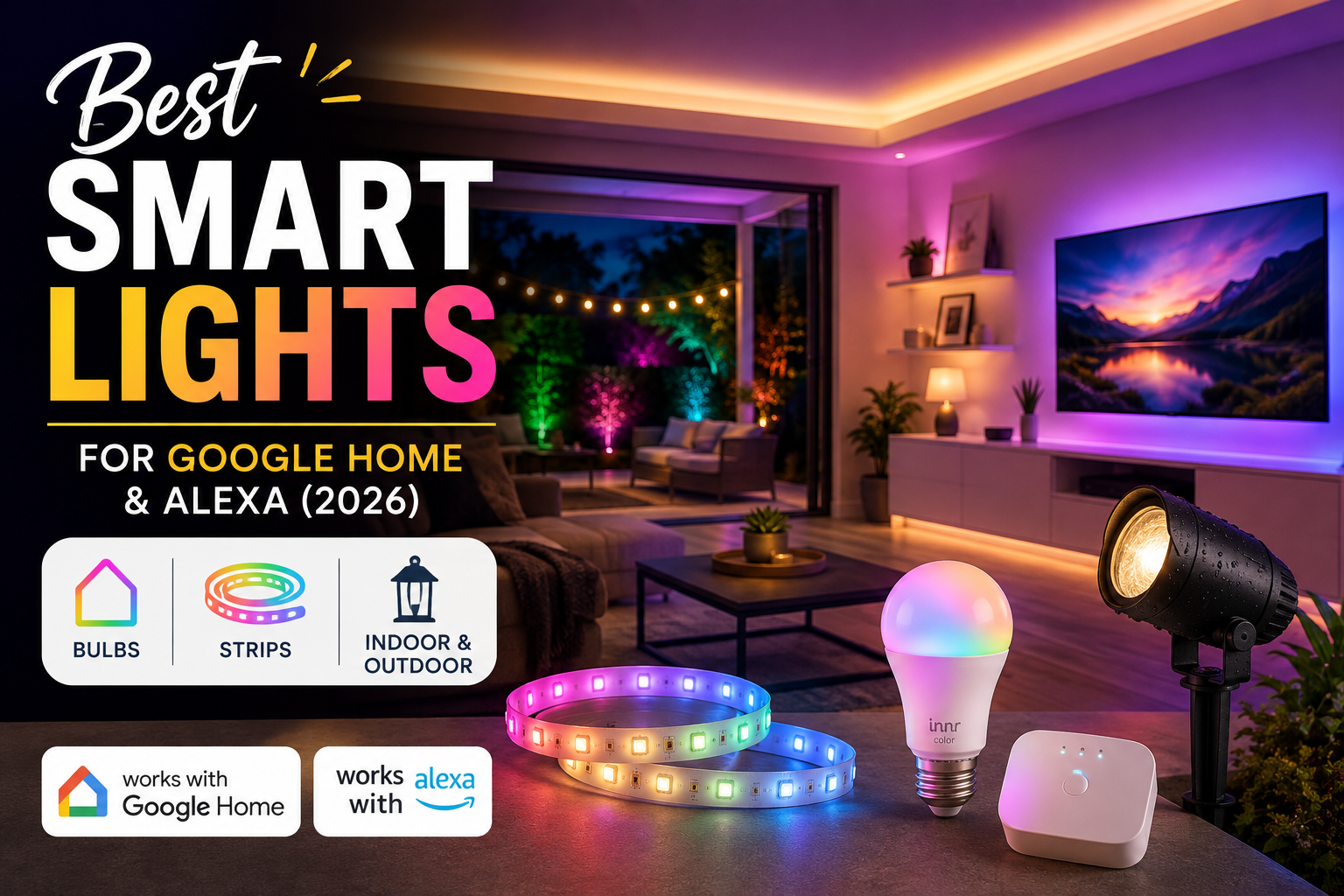
Best Smart Lights for Google Home and Alexa (2026)
by Just Tech Me At
August 23, 2026
*As an Amazon Associate, I earn from qualifying purchases.*



.svg.png)


Introduction
Why Smart Lighting Still Feels More Complicated Than It Should
Smart lights promise convenience, energy savings, and beautiful ambiance—but for many homeowners, the reality is a frustrating mix of compatibility issues, laggy automations, and confusing setup steps. Whether you're trying to sync lights with Google Home or Alexa, create smooth routines, or simply avoid buying the wrong bulb, the smart lighting market can feel overwhelming.
In 2026, the best smart lights finally solve these pain points with faster connectivity, richer color accuracy, and more reliable voice control. This guide highlights the top options, their standout features, and the pros and cons that matter most—so you can upgrade your home without the guesswork.
1. Philips Hue Smart Light Bulbs Starter Kit

Philips Hue remains the reference standard for smart lighting. This A19 starter kit includes color‑changing bulbs and the Hue Bridge, which unlocks advanced scenes, automations, and rock‑solid control with both Google Home and Amazon Alexa.
Key Features
✅ Pros
❌ Cons
2. Kasa Smart Light Bulbs, Full Color Changing Dimmable Smart WiFi Bulbs Compatible with Alexa and Google Home

Kasa’s multicolor bulbs are Wi‑Fi based, inexpensive, and integrate smoothly with both Google Home and Alexa without any hub. They’re ideal if you want reliable color lighting on a budget and don’t mind using Wi‑Fi instead of a dedicated bridge.
Key Features
✅ Pros
❌ Cons
3. Govee 16.4ft RGBIC LED Strip Lights

Govee’s RGBIC light strips are known for vivid, independently addressable segments and dynamic effects. Recent Wi‑Fi models integrate with Alexa and Google Assistant and are excellent for bias lighting behind TVs, under‑cabinet ambient light, or gaming setups.
Key Features
✅ Pros
❌ Cons
4. Sengled Smart Bulb, WiFi Light Bulbs, Dimmable Alexa Light Bulb, Smart Light Bulbs that Work with Alexa & Google Home

Sengled’s Wi‑Fi soft white bulbs are inexpensive, straightforward to install, and don’t require a hub. They offer basic dimmable white light with solid Alexa and Google Home support—great for renters and first‑time smart home users who don’t need fancy color effects.
Key Features
✅ Pros
❌ Cons
5. Nanoleaf Essentials Smart Light Bulbs, Matter

Nanoleaf’s Essentials A19 bulbs are among the most forward‑looking options, supporting Matter over Thread for fast, low‑latency control and broad interoperability. With proper Matter and Thread border router support, they integrate cleanly with both Alexa and Google Home.
Key Features
✅ Pros
❌ Cons
6. Philips Hue White and Color Ambiance Gradient PC LED Lightstrip

The Hue Lightstrip Plus extends the Hue ecosystem into flexible accent lighting. When paired with a Hue Bridge, it offers deep integration with Google Home and Alexa including scenes, routines, and entertainment sync.
Key Features
✅ Pros
❌ Cons
7. Wyze Bulb Color, 1100 Lumen WiFi RGB and Tunable White A19 Smart Bulb, Works with Alexa and Google Assistant

Wyze Bulb Color offers full RGB lighting and tunable whites at a very aggressive price point. They’re Wi‑Fi based and integrate with Google Home and Alexa, and they fit well into homes already using Wyze cameras, plugs, or sensors.
Key Features
✅ Pros
❌ Cons
8. Ring Solar Pathlight

Ring’s Solar Pathlights are smart outdoor lights that tie into the wider Ring ecosystem. They shine in Alexa‑first homes where Ring cameras, doorbells, and lighting all work together. While they don’t integrate natively with Google Home, they’re a strong outdoor option for Alexa users who want motion‑triggered routines and app control.
Key Features
✅ Pros
❌ Cons
9. Govee Smart Outdoor String Lights 2

Govee’s smart outdoor string lights deliver warm or colorful ambience for patios, decks, and gardens. With IP65+ weatherproofing and Wi‑Fi connectivity, they work with both Alexa and Google Assistant for simple voice and routine control.
Key Features
✅ Pros
❌ Cons
How to Choose the Right Smart Lights for Your Home
1. Confirm Ecosystem Compatibility
Make sure the lights you choose work flawlessly with your preferred voice assistant—Google Home, Alexa, or both. Cross‑platform compatibility ensures smoother routines and fewer setup headaches.
2. Decide Between Bulbs, Strips, or Fixtures
Bulbs are the easiest to install, strips offer dramatic accent lighting, and fixtures provide a premium built‑in look. Choose based on the room’s purpose and the lighting effect you want.
3. Look for Fast, Stable Connectivity
Wi‑Fi bulbs offer direct control, while Thread and Matter devices provide faster, more reliable automation. If you want instant response times, prioritize Matter‑enabled lights.
4. Evaluate Brightness and Color Quality
Lumens determine brightness, while CRI affects how natural colors look in your space. High‑quality smart lights offer richer tones and smoother transitions between scenes.
5. Check Automation Features
Look for sunrise/sunset routines, motion‑activated lighting, adaptive brightness, and multi‑room grouping. These features transform smart lighting from a novelty into a daily convenience.
6. Consider Long‑Term Cost
Smart lights vary widely in price. Factor in energy efficiency, bulb lifespan, and whether you’ll need additional hubs or bridges for full functionality.
Disclaimer
Electronic devices, computers, and smart home products should be installed, configured, and used according to the manufacturer’s instructions. Features, compatibility, software updates, and app functions may change over time. Always review the latest product details on the retailer’s page before purchasing, and follow all safety guidelines provided by the manufacturer.
Bottom Line
Final Thoughts: Smart Lighting That Actually Works
The best smart lights for Google Home and Alexa in 2026 aren’t just brighter or more colorful—they’re smarter, faster, and designed to eliminate the frustrations that once held smart homes back. Whether you need dependable voice control, smooth automations, or energy‑efficient lighting that adapts to your lifestyle, today’s options deliver meaningful improvements.
By choosing a device that aligns with your ecosystem, your room layout, and your automation goals, you’ll finally get the seamless lighting experience smart homes have promised for years. The right choice turns everyday lighting into effortless comfort.
Related Articles
















Browse Amazon
Shop Now!
*As an Amazon Associate I earn from qualifying purchases.*
More Smart Devices*As an Amazon Associate I earn from qualifying purchases.*
