Just Tech Me At
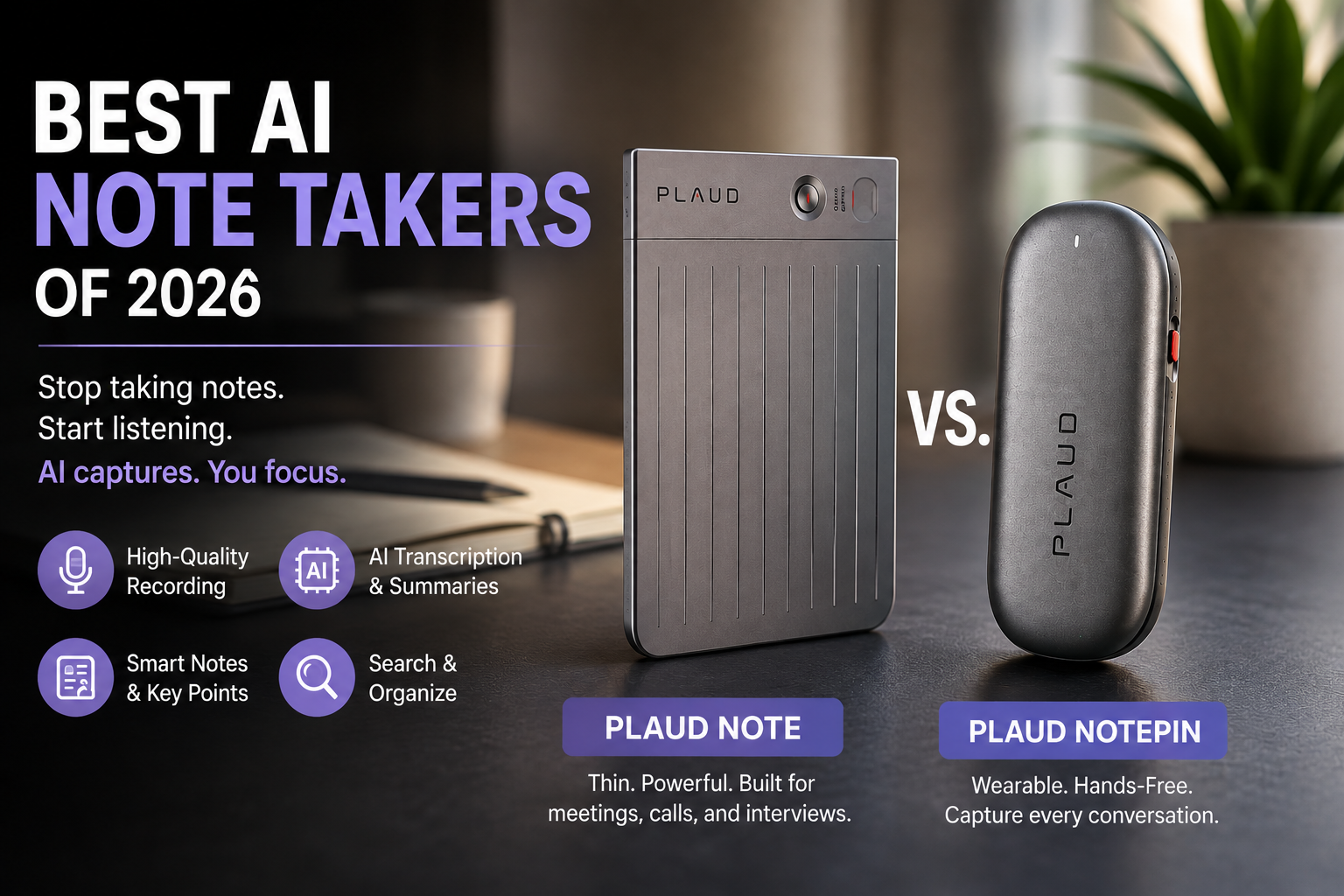
Stop Taking Notes and Start Listening:
Plaud Note vs. NotePin
AI Note Takers (2026)
by Just Tech Me At
September 3, 2026
*As an Amazon Associate, I earn from qualifying purchases.*



.svg.png)

Introduction:
Smarter, Simpler, and Designed for Everyday Productivity
Taking notes during an important conversation creates a familiar challenge: the more attention you give to writing everything down, the less attention you can give to the person speaking. Meetings, interviews, lectures, and casual discussions often include details you don’t want to forget, yet trying to capture every point manually can interrupt your focus or the natural flow of conversation.
That’s the problem AI note takers are built to solve. Instead of typing or writing throughout a discussion, these devices record speech and use artificial intelligence to convert it into transcripts, summaries, and key points. The goal is capturing and preserving information so you can stay fully engaged while the conversation happens—and review the organized notes afterward.
In this comparison, we’ll explore how the two devices handle recording quality, transcription accuracy, AI summaries, portability, and battery life. Most importantly, we'll look at which model best fits your workflow when your goal isn’t managing meetings—it’s staying present in the moment while your AI note taker remembers every word for you.
AI Note Takers vs AI meeting Assistants
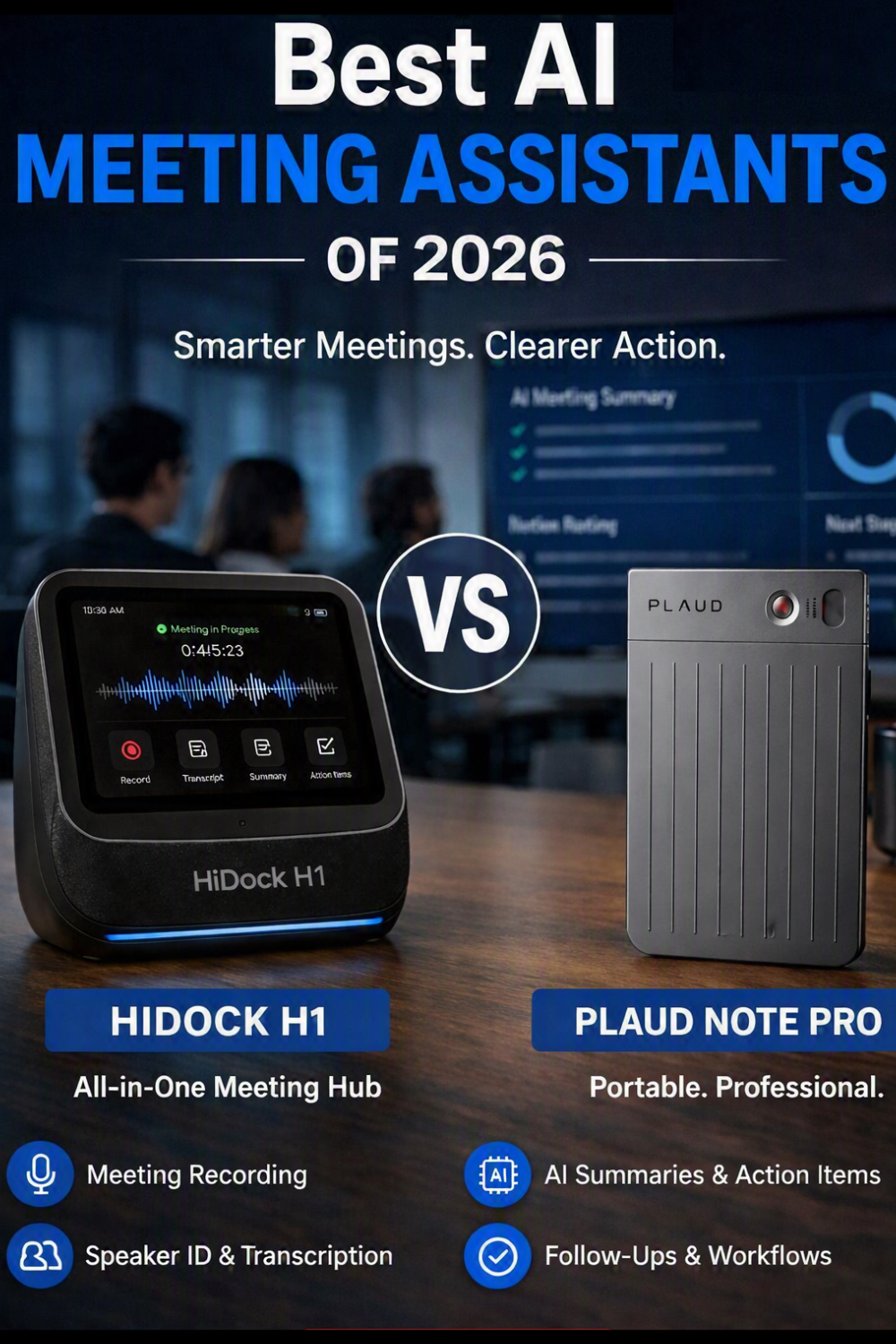
Before moving on to the featured products, let's go over the difference between AI Note Takers and AI Meeting Assistants. While meeting assistants help manage agendas, decisions, and follow‑ups, note takers concentrate on accurate voice capture and intelligent summarization. They’re ideal for users who want effortless documentation without the complexity of full meeting management tools.
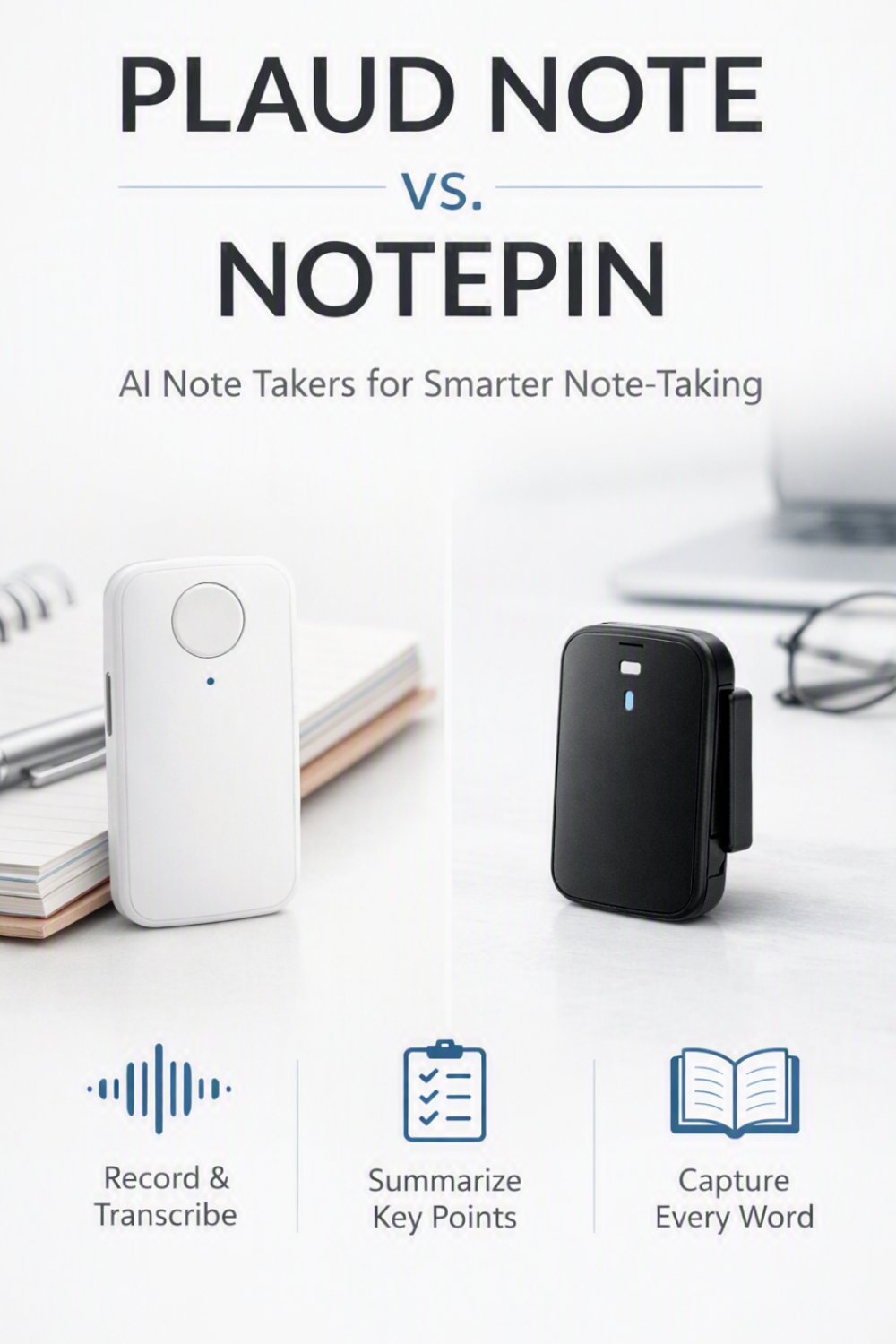
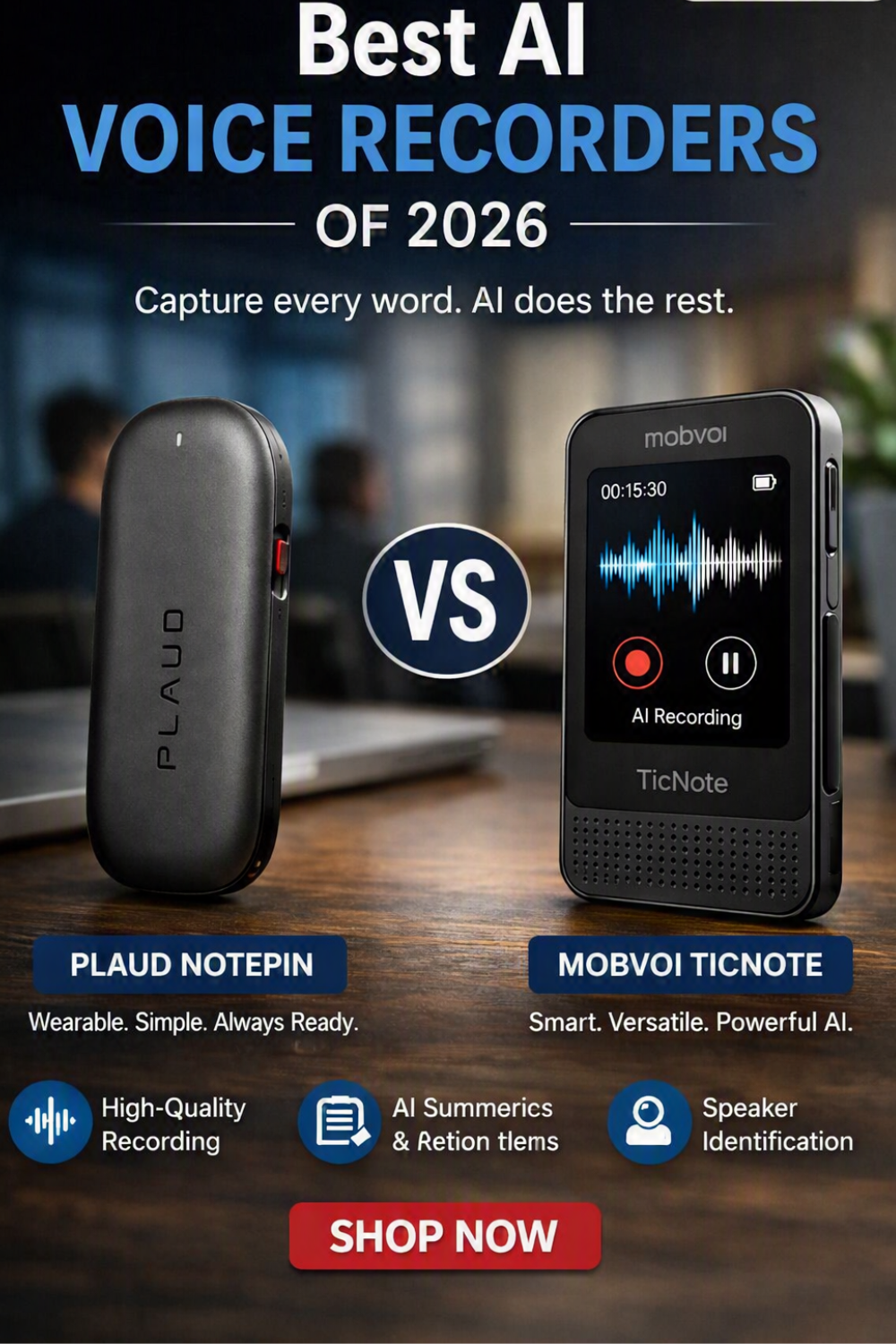
The Plaud Note and Plaud NotePin illustrate this simplicity beautifully. Both record conversations and use Plaud's AI engine to generate structured notes and summaries, but they're designed for different styles of capture. The Plaud Note is a lightweight, pocket‑sized recorder perfect for students, mobile professionals, and creators who need quick, reliable voice capture. The wearable Plaud NotePin offers hands‑free recording for spontaneous conversations and on‑the‑go documentation.
1. Plaud Note

Plaud Note Overview
The Plaud Note is the entry-level version of Plaud’s AI note-taking devices. It’s designed for quick voice capture, everyday documentation, and simple transcription through the Plaud app. Unlike the Pro model, the Plaud Note uses a single microphone and basic noise reduction, making it best suited for typical indoor environments rather than loud or complex audio situations. It’s lightweight, easy to carry, and ideal for users who want fast, convenient note-taking without premium hardware.
Key Features
✅ Pros
❌ Cons
2. Plaud NotePin

Plaud NotePin Overview
The Plaud NotePin is a wearable, clip-on AI recorder designed for spontaneous conversations, lectures, and hands-free note-taking. It attaches to clothing or bags and captures audio directly from your environment, making it ideal for users who want quick, unobtrusive recording. While compact and convenient, its microphone is less powerful than the Plaud Note or Note Pro, so it performs best in quiet or moderately noisy settings.
Key Features
✅ Pros
❌ Cons
Disclaimer
Electronic devices, computers, and smart home products should be installed, configured, and used according to the manufacturer’s instructions. Features, compatibility, software updates, and app functions may change over time. Always review the latest product details on the retailer’s page before purchasing, and follow all safety guidelines provided by the manufacturer.
Bottom Line
The biggest advantage of an AI note taker is the freedom to stop treating note-taking as a second job. Instead of splitting your attention between listening and writing, you can stay fully present in the conversation while the device captures the details for you.
The Plaud Note and Plaud NotePin both solve that core problem, but they’re built for different styles of note-taking. The Plaud Note is a simple, pocket-sized recorder designed for everyday use—perfect for students, mobile professionals, and creators who want quick, reliable voice capture without the advanced hardware of the Pro model. The Plaud NotePin takes a more hands-free approach, clipping onto clothing or bags so you can record spontaneous conversations, lectures, or brainstorming sessions without holding a device.
Neither device needs to function as a full meeting-management system to be valuable. Their strength is much more straightforward: capture what was said, turn it into useful notes, and let you focus on the people and ideas in front of you.
That distinction also matters when choosing between an AI note taker and an AI meeting assistant. If your biggest challenge is simply remembering the content of a conversation, an AI note taker is likely the right fit. If your needs include agendas, follow-ups, decisions, and broader meeting workflows, then an AI meeting assistant may be the better category to explore.
Related Articles


































Browse Amazon
Shop Now!
*As an Amazon Associate I earn from qualifying purchases.*
More Smart Devices*As an Amazon Associate I earn from qualifying purchases.*
